
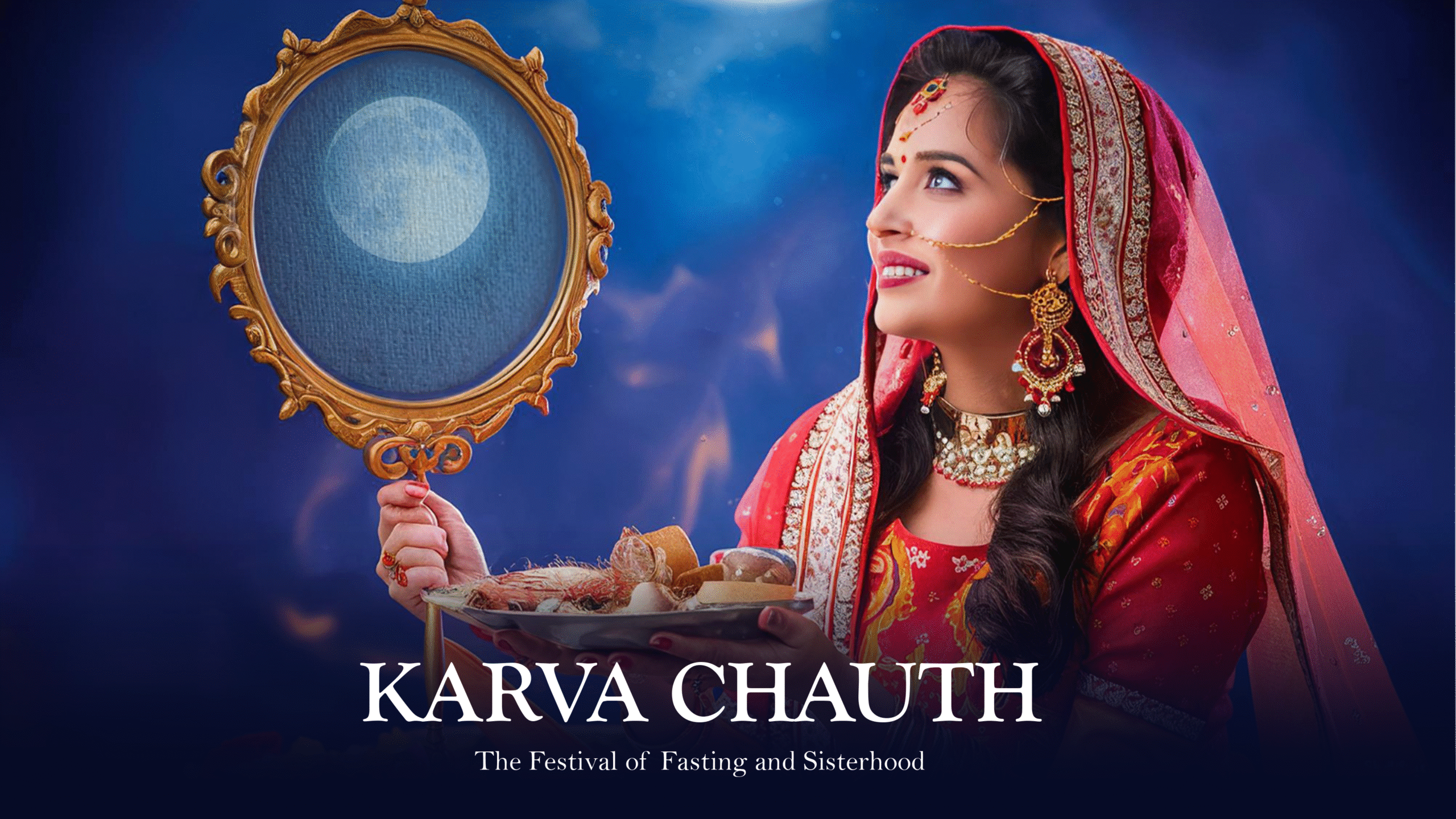
Karva Chauth: The Festival of Fasting and Sisterhood
The moon rises like a silver coin in the dark sky, and across countless rooftops, women lift their sieves, their eyes glowing in the moonlight. Through that sieve, they look at the moon, and then, at the face of their spouses. This is the night of Karva Chauth, an ancient Indian custom that celebrates love, faith, and the invisible thread that binds two lives together under the same moon.
Interestingly, Karva Chauth isn’t just about fasting. There’s a whole story behind this day, and like all great stories, this too began long ago, when kingdoms rose, and wars raged.
The Story Behind The Custom
When Rajput warriors set out to battle, their wives would gather, fasting from sunrise to moonrise, praying for their husbands’ safety. However, if you look closer, you’ll notice that this has never been about the husbands alone.
The primary idea behind this custom is to celebrate the strength of the women that were left behind, and their sisterhood.
Karva, means an earthen pot, and Chauth, is the fourth day after the full moon. Karva Chauth was seen as a day when women poured their strength into prayers to safeguard their husbands.
But yet, beyond what stories are on the surface, we find another one. This story is about friendship among women.
The Role of Sisterhood in Karva Chauth Traditions
Let’s go back to the time when a new bride would leave her parents forever, possibly travelling to another city or village far far away, a custom was born.
Every bride was assigned a ‘dharam-behn’, or in modern terms a ‘soul sister’ in her new home. This ‘dharam-behn’ would be her friend, and more importantly, her emotional support.
On Karva Chauth, they would exchange painted karvas filled with bangles, sweets, and other gifts, almost like a care package. This would happen every year, like a yearly renewal of their bond.
Karva Chauth Legends: The Story of Veeravati
Of course, there are several stories that point to deeper meanings regarding Karva Chauth, among them, was the story of Queen Veeravati. Veeravati was tricked by her brothers, who had good intentions, into breaking her fast early, only to see her husband fall to the floor, dead.
Grieving, she cried and screamed. Her grief was so deep and profound, the goddess Parvati appeared before her and told her to fast again, this time, with full focus and faith. After the fast, her husband was restored to life!
Another tale spoke of Karva, a woman whose love gave her enough power to have even Yama, the god of death bowing before her.
Karva Chauth in a Modern Context
Now, let’s fast forward to today. The scene has changed. We juggle office deadlines, along with hectic schedules, but the energy has remained the same. Women wake up before dawn, having their early morning meal, which must be finished before sunrise.
They dress up, spend time with friends, and of course, fast the whole day. However, many women will tell you that they do it for themselves, not just for the men in their lives, but for the idea of love itself.
This is a day of togetherness, both, with their spouses, and with their chosen sisterhood.
Perhaps, this is the time we looked at this festival beyond the popular filmy lens. Karva Chauth is actually about women choosing their intention to fast over their impulse to eat, choosing the community of sisterhood over isolation, and of course, choosing to honour love through devotion, not dependence.
For when the moon rises, it blesses not only the husbands, but also every woman who waited throughout history, for news, and for peace.
So tonight, when you go to look at the moon, whether it is through a sieve, your window, or even your phone camera. Remember, this is a part of a story that began centuries ago, by women who fasted for love, and for community.
When you look at the moon tonight, what do you see reflected in its light; a ritual, a romance, or a reminder of your own quiet strength?
0 Comments