
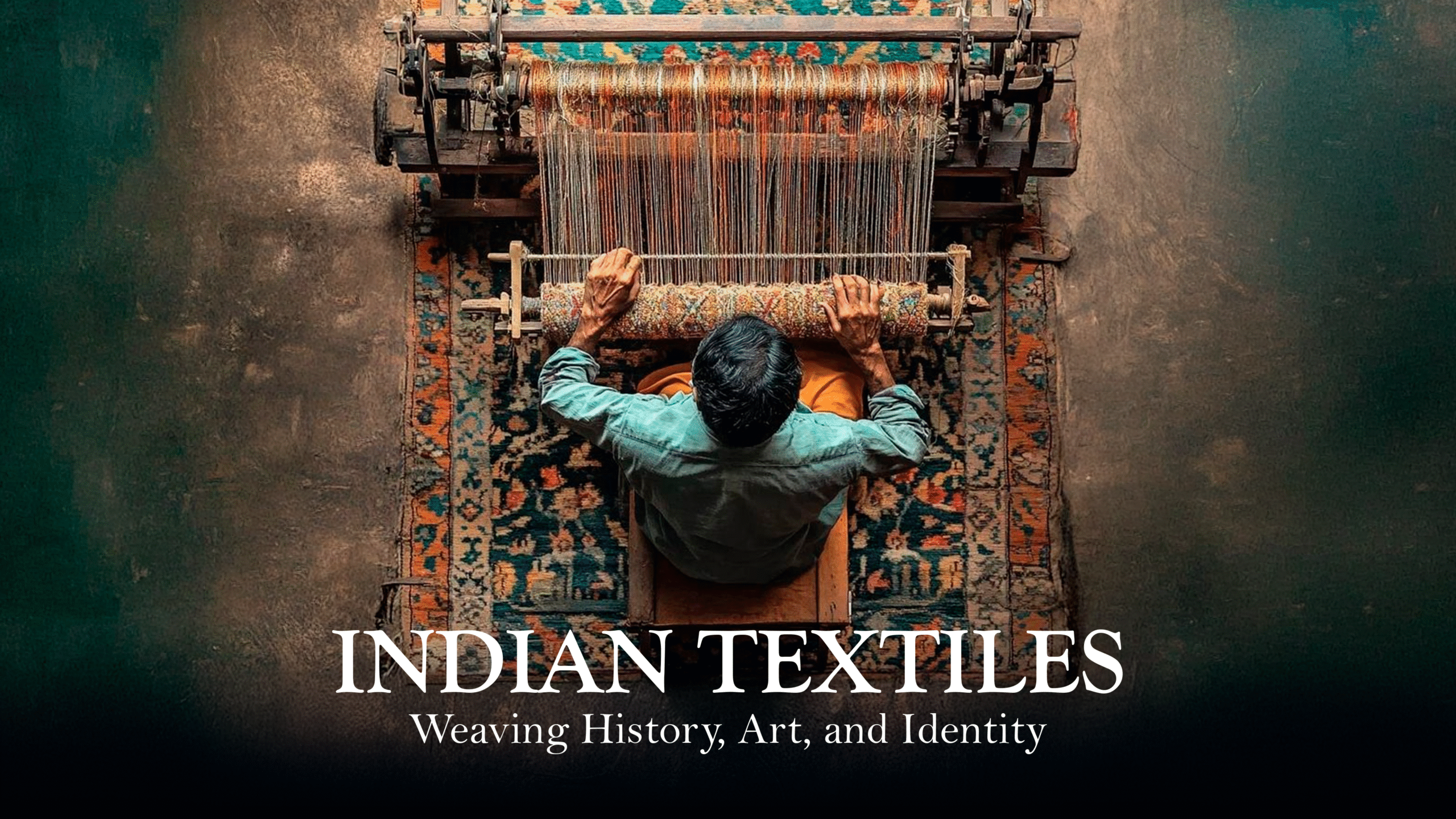
Indian Textiles: Weaving History, Art, and Identity
In a culture defined by the timeless cycle of life and rebirth, what happens when a craft that’s been the heartbeat of India for 6,000 years starts to fade? This isn’t just about a textile; it’s about a looming cultural and economic crisis for the weavers of India, whose wisdom is currently being undervalued in the age of fast fashion.
The Crisis of the Handloom: No Money, No Respect
The ancient stories teach us that great efforts yield great rewards, but the modern reality for a handloom weaver—the artisan of fabrics so delicate they were called “woven air” (baft hawa)—is one of diminishing returns. The core problem is a perfect storm of economics and consumer behavior:
- The Price War: A handwoven Kanjivaram silk or Pochampally Ikat saree takes weeks, sometimes months, of painstaking, skilled labor. This makes it inherently expensive. The modern youth, addicted to the instant gratification of cheap, machine-made apparel, simply cannot justify the cost. They prioritize quantity over quality, a stark contrast to the Indian tradition of heirloom textiles.
- The Manpower Drain: The new generation of weavers is walking away. Why? No money, and no respect. The profession offers low, unstable wages, forcing young people to migrate to cities for menial, non-skilled jobs that still offer a better, more secure income. The traditional lineage is broken, meaning the knowledge of complex techniques—like the double-ikat Patola—dies with the aging master craftsman.
- The Respect Deficit: In the current economy, the skilled artisan often lacks the social standing given to white-collar workers. This lack of respect for their cultural contribution further pushes the younger generation to reject their ancestral craft in favor of seemingly more ‘modern’ and ‘aspirational’ careers.
The Rise of Khadi 2.0: Fusion on the Global Ramp
The one element giving this ancient craft a fighting chance is its unmatched artistic value and the global rise of slow, sustainable fashion. Just as Mahatma Gandhi repurposed Khadi as a symbol of resistance, modern designers are repositioning traditional textiles as the ultimate form of luxury and ethical consumption.
On fashion ramps worldwide, Indian traditional textiles are not just being worn—they are being reimagined:
- Global Fusion: Designers like Sabyasachi Mukherjee, Rahul Mishra, and Anita Dongre are celebrated for lifting regional crafts onto the international stage. They take fabrics like Banarasi brocade, Chikankari, and Ajrakh prints and fuse them with contemporary silhouettes like bomber jackets, western gowns, and modern minimalist ensembles.
- A New Aesthetic: Khadi is no longer just a political statement; it’s a sleek, eco-friendly fabric used for minimalist tunics and trousers. The vibrant geometric patterns of Ikat are being used for structured trench coats and chic accessories, appealing directly to a global, educated, and ethically-conscious consumer who demands authenticity over fleeting trends.
The weavers may be struggling, but their textiles are thriving in the high-fashion world, proving that true art never loses its intrinsic value.
Reflective Question
The artisan’s wisdom lies in patience, precision, and the courage to take weeks creating what a machine does in minutes. In what area of your own life are you currently sacrificing the ‘handloom quality’ (lasting value) for ‘fast fashion’ speed, and what would it cost you to slow down and weave your creation properly?
0 Comments