
Touching Feet: A Symbol of Respect in India
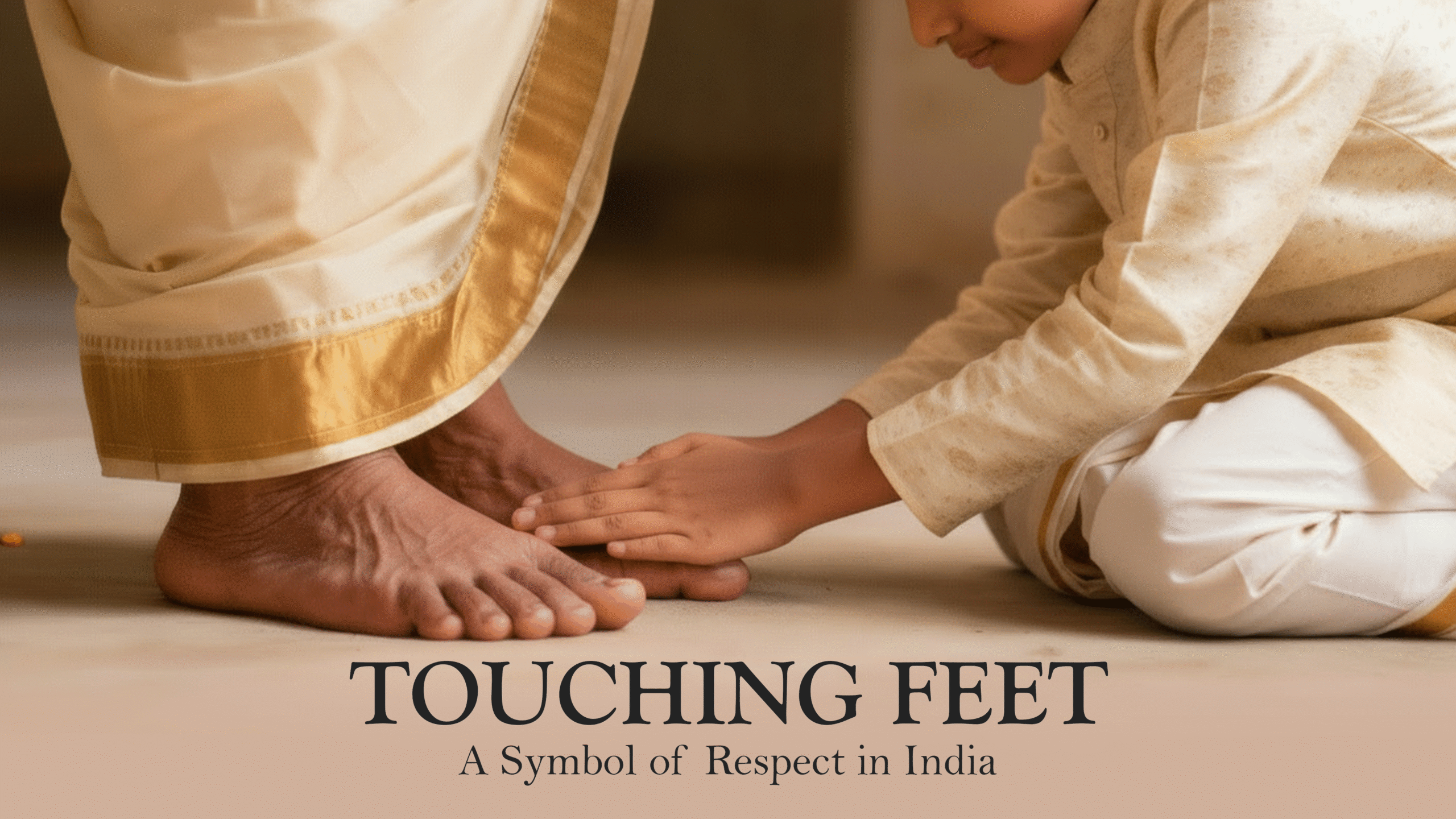
Every morning across countless Indian homes, something quietly beautiful unfolds. Before leaving the house, whether it is for school, work, or even a big meeting, you’ll often find someone bending down to touch the feet of an elder before rising again.
Charan Sparsh: More Than Just a Ritual
On the face of it, this is a very simple gesture, yet it is one that carries years of meaning. It may be a small act, but your touching your elder’s feet acknowledges their wisdom and their journey, seeking their blessings before beginning your own
We call it ‘Charan Sparsh’, with charan, meaning feet, and sparsh, meaning to touch. This is a tradition so old, even the Vedas spoke of it, and yet, you’ll find it in most homes today.
An Old Custom with a Modern Soul
It’s fascinating when you think about the fact that this gesture has survived the test of time. From ancient ashrams to modern apartments. We still get to see people bend down before their parents, or grandparents, because deep down, we know that their blessings still matter
Perhaps this custom isn’t about rules or religion, rather, about connection. Think about it. The moment your hand touches someone’s feet, something is exchanged between the two of you. Reverence from your side, and blessings and goodwill from theirs.
The Invisible Circuit of Blessings
In ancient India, people believed that every person carried an energy field, a unique vibration formed by their actions, thoughts, and wisdom. The older a person grew, the stronger their energy became. When you touched their feet, it is believed that your energy connected with theirs, forming some kind of a circuit. The elder’s blessing was believed to transmit positivity, calm, and strength.
A Yaksha’s Question and Yudhishthir’s Wise Answer
The Mahabharat also has a story that speaks of this custom. Once, when the Pandavs were travelling through a forest, they encountered a Yaksha, a spirit of nature, who asked Yudhishthir, “How can a person become great and powerful.” With a smile, Yudhishthir answered, “By devotedly touching the feet of the mother and father, teachers, and elders, and serving them until they bless you.”
The Pandavas would then put these words into practice, as they went to seek blessings from their teachers and Gurus, Drona, Bheeshma, as well as Dhritrashtra and Gandhari before the great battle against the Kauravs.
Old Tradition, New Reasons
The same custom is still going strong. Think about it, before launching a start-up, giving an exam, or even moving abroad, people still bend to take blessings, because no matter how modern we get, every new beginning feels steadier when it is backed by the power of an elder’s good wishes.
Some have said that the custom of touching feet makes sense from a scientific lens as well, seeing that bending forward would improve blood flow to the brain. This would, in turn, calm the nervous system and reduce stress.
Why Bowing Down Can Be the Strongest Step Forward
Forget the dusty history books and the religious texts for a moment. This gesture—this simple bending down—is a pure, undiluted lesson in leverage.
In a world that screams about your personal brand, your ego, and “main character energy,” this tiny act is an incredible, almost subversive power move. When you lower yourself to the feet of an elder, you aren’t losing status; you’re tapping into a current of strength and experience that you simply do not possess yet.
Think of their life not just as years, but as accumulated current. Every scar, every success, every lesson learned is a tiny charge. When your hand touches their feet and then your head, you are completing the circuit. You are saying, “I pause my personal hustle to borrow the wisdom of your entire journey.”
You are acknowledging your place in a grand narrative that stretches further back than you can imagine.
So, the next time you see this quiet ritual unfold, don’t see a cultural act. See an unbroken chain of love, humility, and history. See a single, clear message passed down through the centuries, whispered from one generation’s knee to the next:
You are not alone, and your next step is steadier because of the ones who walked before you.
Now that we’ve spent some time thinking of an elder’s life as ‘accumulated current,’ look at your own journey. What is the single, hard-won lesson (your metaphorical ‘feet’) that carries the most valuable charge? And, if you couldn’t physically kneel, what non-verbal, simplest human act could you offer today to consciously complete that circuit and pass on your blessing to someone who needs it?
0 Comments