
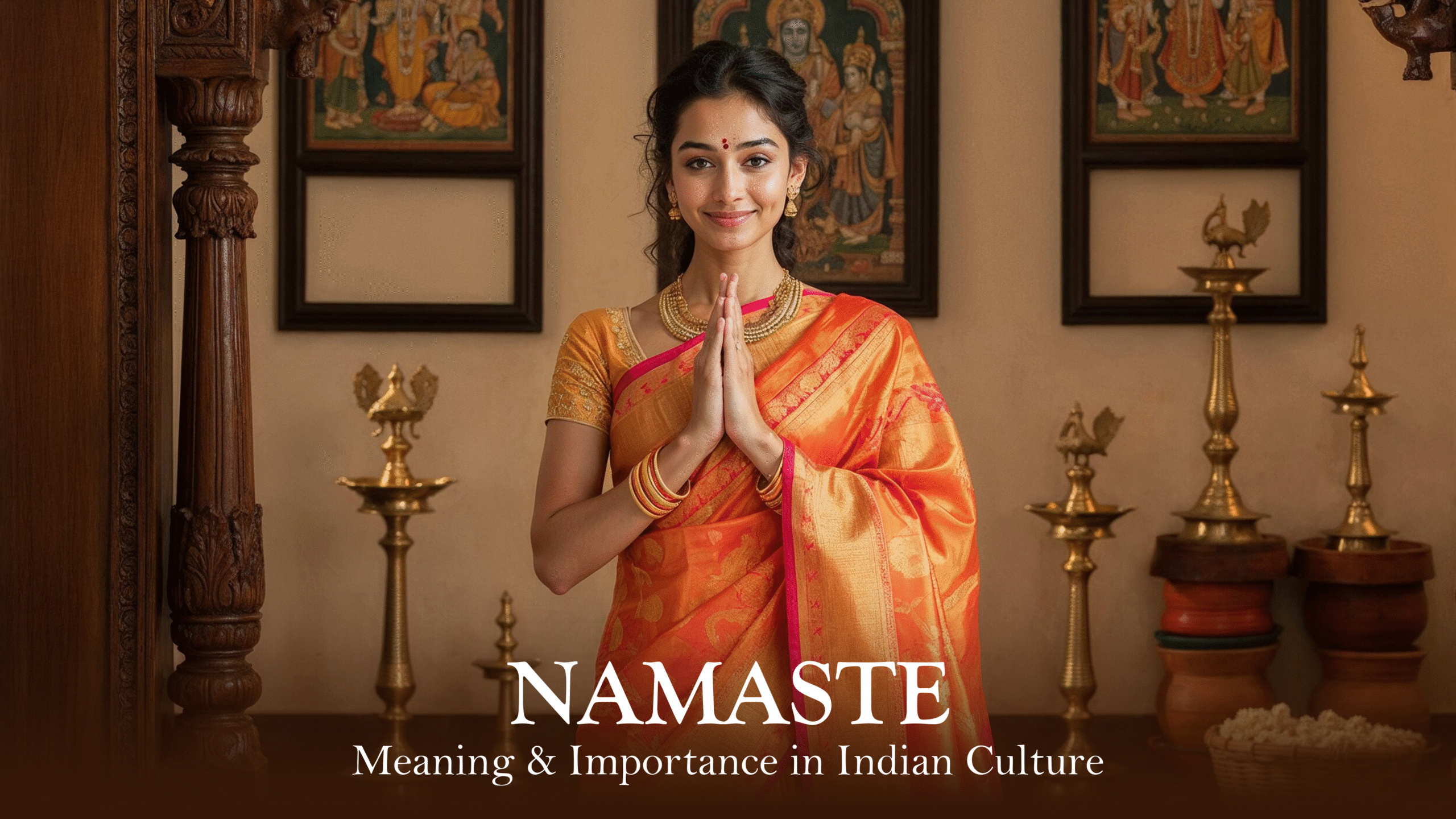
Namaste: Meaning & Importance in Indian Culture
Once upon a time, there was a strange quiet in the world. Streets were empty, doors closed, and people who once hugged each other freely began to hesitate. This was during the height of the COVID-19 pandemic, when the world had to unlearn how to touch, and yet, amid all that distance, a centuries-old gesture found the spotlight again. The Namaste.
How the Namaste went global
At a time you couldn’t bump elbows, or fists, or even shake hands, you pressed two palms together with a gentle bow, silently telling the person you were greeting, “I see you, and I acknowledge you.”
The gesture’s popularity went global, displayed on television screens and presidential stages, from Delhi, to Washington, to social media feeds. Suddenly, what was once considered a cultural symbol became a global act of connection.
Here’s the open secret though, Namaste wasn’t born during COVID. It had simply been waiting, like an old song, rediscovered by a new generation.
Behind the Gesture – The Oldest ‘Namaste’ in Indian Culture
The story of Namaste goes back more than a thousand years ago, with sculptures from the Indus Valley Civilization, their hands folded. This is simply evidence of this greeting living longer than civilizations.
The word itself comes from Sanskrit. ‘Namas’ means to bow, and ‘Te’, means ‘to you’. It literally means “I bow to you”, but the beauty here, is that when someone says ‘Namaste’, they don’t bow to your clothes, your job, or your fame. They bow to you, and to the spark within you.
Now, let’s take a moment to imagine a world built on the foundations of the ideas behind ‘Namaste’. A world where every meeting begins with mutual respect, and where even arguments start with acknowledgement over aggression.
Namaste isn’t simply a word. It is a mindset, it is a thought process, and of course, a reminder that we’re made from the same things. Soul as well as stardust.
Namaste in Ancient India and the Modern World
In ancient India, this gesture was considered sacred. You used it before gods in temples, before elders in homes, and before friends on streets. The Anjali Mudra pose of the Namaste, with the palms pressed together was seen in classical dance, in yoga, and even in the way devotees would greet dawn. All with the same gesture, all with the same humility.
But interestingly, it all feels similar today. We send each other emojis, but don’t stop to think that maybe, Namaste was the original emoji. Simple, elegant, meaningful, and yet, without physical contact.
Namaste’s Modern Relevance
When world leaders chose to forego formal handshakes and replace them with the Namaste during COVID, it wasn’t only about hygiene. It was perhaps an admission that maybe, in all our modern technology and travel, we had lost our humility, and this ancient Indian greeting was reminding us what it really meant.
Foreign actors began using it in interviews, Yoga teachers were bombarded with requests to explain the meaning behind it, and moreover, across continents, people folded their hands and bowed to each other, as souls acknowledging souls.
Perhaps that’s why it has survived for over thousands of years, because it carries something the world needs – Respect without reason, and connection without contact.
The Namaste Mindset – A Code for Modern Living
We’re back to shaking hands now. But the pandemic didn’t just expose our need for distance; it exposed our profound need for dignity.
The handshake is about being polite. The Namaste is about being present.
If you walk away with one idea, let it be this: The most powerful form of connection you can ever offer is not a firm grip or a quick wave. It is the simple, humble, ancient decision to see the soul, not the surface.
The true genius of Namaste isn’t that it survived 5,000 years. It’s that it remains the most revolutionary, hard-hitting gesture available to you today. It is your ultimate power move; a way to cut through the noise, bypass the ego, and instantly command respect by first offering it.
So, could a simple gesture like Namaste change the way we handle conflict, ego, or pride in daily life?
Let us know in the comments below!
0 Comments