
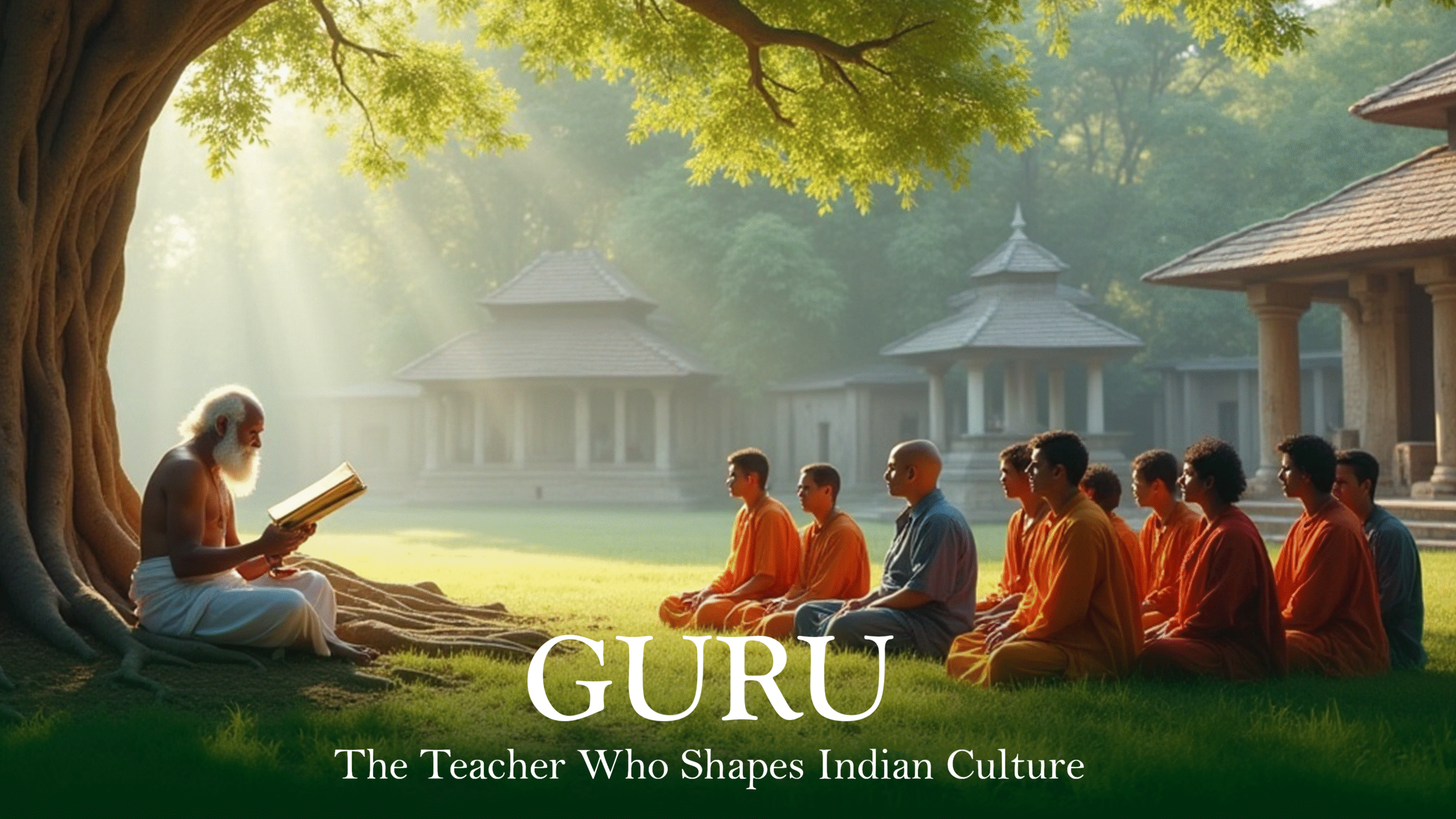
Guru: The Teacher Who Shapes Indian Culture
In Indian culture, few relationships hold as much reverence and significance as that between a Guru and their student. The famous doha of Kabeer “Guru Govind dono khade kako lago pay, Balihari Guru aapne Govinda diyo milaye” perfectly encapsulates this reverence—it translates to “Both Guru and Govind (God) are standing before me; I bow a thousand times to the Guru, for he has shown me God.” This poetic wisdom speaks to the extraordinary place a Guru occupies in the Indian spiritual and intellectual landscape.
The Foundation of Knowledge
Historically, India’s approach to transmitting knowledge has been fundamentally oral. Before the age of written texts and digital media, knowledge flowed directly from the Guru to the Shishya, from teacher to student. This intimate, personalized method of education was not merely about transferring information—it was a sacred trust. The Guru was a keeper of wisdom, a guardian of traditions, and a sculptor of character. The ancient Sanskrit verse perfectly captures this transformative power:
अज्ञान तिमिरान्धस्य ज्ञानाञ्जन शलाकया|
चक्षुरुन्मीलितं येन तस्मै श्री गुरवे नमः॥
“From the darkness of ignorance, you have removed my delusion with the light of knowledge. I bow to you, O revered Guru.”
Beyond Information to Worldview
What distinguishes a true Guru from a mere instructor is their role in shaping not just knowledge, but an entire worldview. A Guru serves as a mentor, philosopher, and guide who helps students understand not only what to think but how to think. A great Guru does far more than impart academic knowledge; they cultivate good students, which in turn creates conscientious citizens. This holistic approach to education recognizes that learning encompasses ethics, wisdom, and character development alongside intellectual growth.
The responsibility of seeking a Guru in India has traditionally been placed upon the student. Rather than waiting passively, serious seekers of knowledge have historically embarked on spiritual and intellectual journeys to find a worthy Guru. This active quest reflects the understanding that true learning requires dedication, humility, and genuine desire for growth.
Divine Lessons from Nature
One of India’s most fascinating spiritual traditions centers on Lord Dattatreya, a revered deity credited with having twenty-four Gurus. Remarkably, these Gurus were not human teachers but rather elements of nature and life itself. According to tradition, Dattatreya learned spiritual lessons from the earth, the wind, fire, the sun, water, and even unexpected sources like a prostitute. This unique perspective demonstrates that wisdom exists everywhere, and true seekers can find guidance in all aspects of existence if they possess the insight to recognize it.
Guru in the Modern Age
In today’s complex world, the role of the Guru has paradoxically become even more critical. We live in an information age characterized by an unprecedented deluge of data— much of it unfiltered, unchecked, and often contradictory. Social media algorithms feed us endless content, yet this abundance of information frequently leads to confusion rather than clarity.
This is precisely where the Guru becomes indispensable. In this era of information overload, a true Guru serves as a discriminating guide who teaches students not merely what information exists, but how to evaluate it critically. They show us the path to transforming raw information into genuine knowledge. More importantly, they illuminate how to use this knowledge to elevate our lives—to cultivate wisdom, virtue, and spiritual growth.
Conclusion
The Guru remains a timeless and vital figure in Indian tradition. Whether in ancient times or the modern digital age, the Guru’s role transcends the simple transfer of facts. A Guru illuminates the darkness of ignorance, guides students through life’s complexities, and nurtures the development of enlightened citizens. In a world drowning in information, the wisdom of seeking and learning from a true Guru has never been more relevant. The tradition reminds us that true education is ultimately a journey of the soul, guided by one who has already walked the path.
0 Comments