
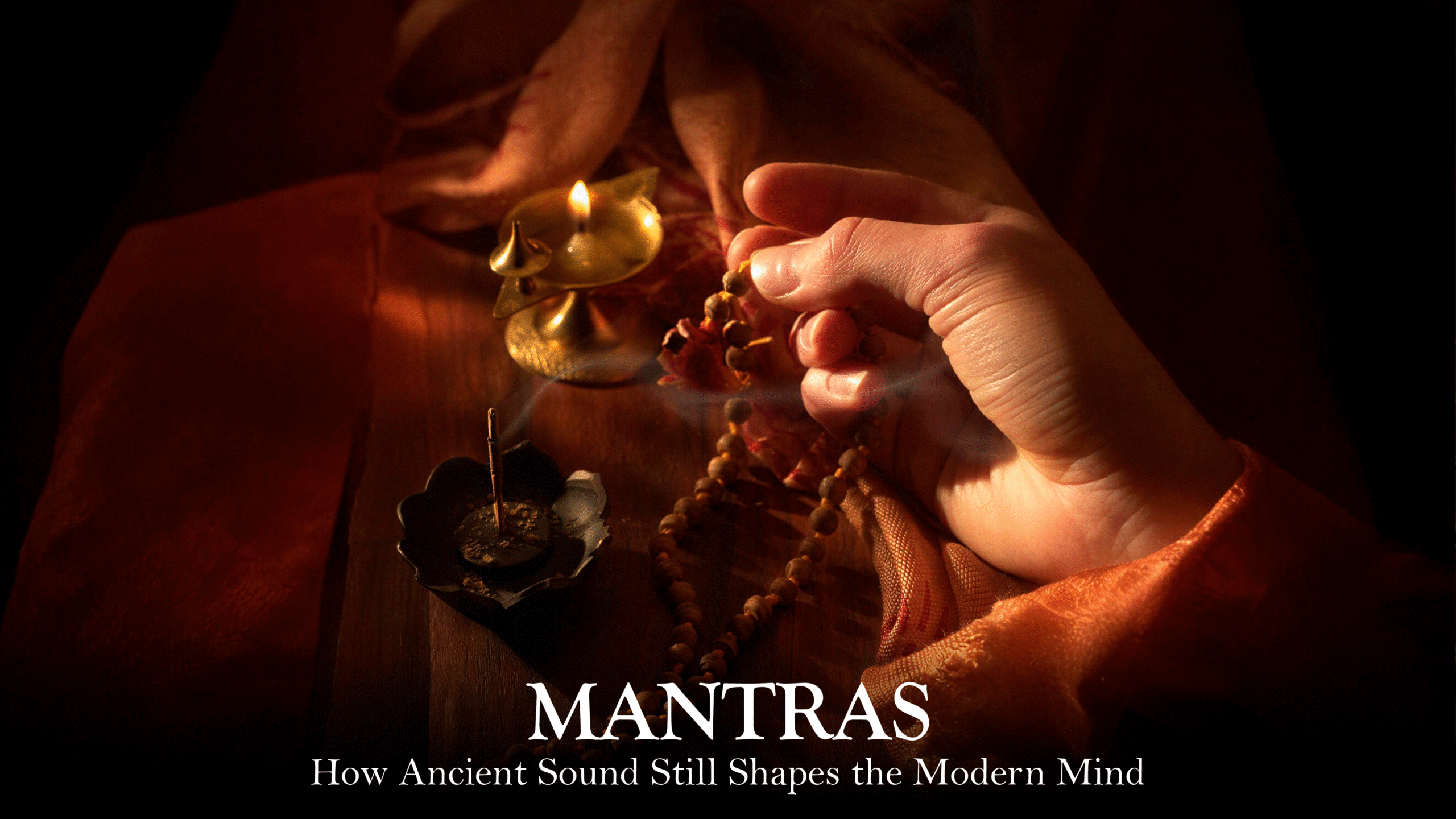
Mantras: How Ancient Sound Still Shapes the Modern Mind
Before Words, There Was Sound
Long, long ago, before language, as we know it existed, there was only sound. The learned people of the time called this sound a mantra.
They knew that sound itself could heal, awaken, and even transform reality. In old temples, monks once chanted until the walls seemed to breathe with them.
Today, the same vibrations hum quietly in yoga studios and in meditation apps. We seemed to have turned out backs on the mantras, believing the world has changed. However, the secret of sound has not.
The Science and Spirit Behind the Mantra
Everytime you hum your favourite tune in the shower or whisper “Om” in a yoga class, you tap into one of the oldest practices in the world. The mantra. Long before microphones or machines, humans discovered that sound was more than just communication. It was creation
In ancient India, it was called Shabd Brahman, which translates to “Sound is God”. Interestingly, modern science is slowly catching up. Researchers now study how chanting changes brainwaves, slows breathing, and lowers stress hormones.
But beyond this data lies something far more mysterious. – A sense that the universe itself might be listening
From Temple Chants to Brainwaves
Picture this: A night without electricity. Torches flicker against sandstone walls. A circle of monks sits in silence, until one voice begins to chant. It’s deep, slow, and steady. Another joins in, then another, then another. The air begins to pulse. This sound is felt like a heartbeat, shared across bodies.
Let’s fast forward. Centuries later, a neuroscientist puts volunteers in an fMRI scanner and asks them to chant “Om”. As they do, she watches their brain activity shift. The limbic system – the brain’s emotional centre cools down, cortisol levels drop. Breathing synchronizes. The same magic that once filled temples now glows on a screen.
You see, the monks may have called it the vibration of the soul, now science calls it parasympathetic activation, but both describe the same thing.
The Ancient Traditions That Still Resonate
In Buddhist, Hindu, and Sikh traditions, chanting mantras was for mind and spirit. Each sound was crafted to tune the human body like an instrument. “Om” resonated with the heart, “Gayatri” with clarity, so on, and so forth. Ancient teachers said a mantra wasn’t a phrase, it was a living frequency, asking for participation rather than belief.
When repeated, the sounds would begin to rearrange your inner landscape.
Let’s put it this way, it’s like updating the software of your mind using vibration instead of code.
Quite a few modern studies even back this up. Chanting mantras for even 10 minutes a day can reduce anxiety, improve focus, and regulate the heartbeat. The vibrations stimulate the vagus nerve, which in turn, activates your body’s natural calm mode.
Across Vietnam, women still gather in pagodas, their voices weaving through incense smoke, sometimes not even understanding the ancient words, but feeling their peace. In Japan, monks chant sutras that ripple through mountains. In Los Angeles, people chant mantras in hybrid Sanskrit-English mixes through Bluetooth speakers.
The technology may have changed, but the intention hasn’t.
Why Mantras Matter in a Noisy World
Today’s world hums with digital noise: Notifications, podcasts, traffic, etc. Our minds scroll faster than our hearts can keep up. Perhaps, that’s why mantra chanting feels far more relevant than ever. It offers something the screen can’t – Resonance.
You see, when you chant, you’re syncing with the world. Your breath, heartbeat, and sound fall into rhythm, giving you a reminder that you’re a part of something vast and alive. The same principle that vibrates a speaker also vibrates galaxies. You become music.
Imagine office workers starting their day not with coffee but a collective hum. Imagine classrooms beginning with a simple “Om” to steady young minds. Intriguing, is it not?
The Real Power Lies in Participation
The true power of mantra chanting lies not in perfect pronunciation or ancient ritual but in participation. It’s about giving voice to silence, breath to thought, and rhythm to emotion. You don’t need a temple or a guru, just a few minutes and a willingness to listen to yourself differently.
Every chant is a conversation between your body and the universe, and every vibration you send out finds its echo somewhere — perhaps in another heart, perhaps in another world.
What if the next time you felt anxious, instead of checking your phone, you tried to hum softly, steadily, until the vibration settled inside you?
Would the world sound different, or would you?
0 Comments