
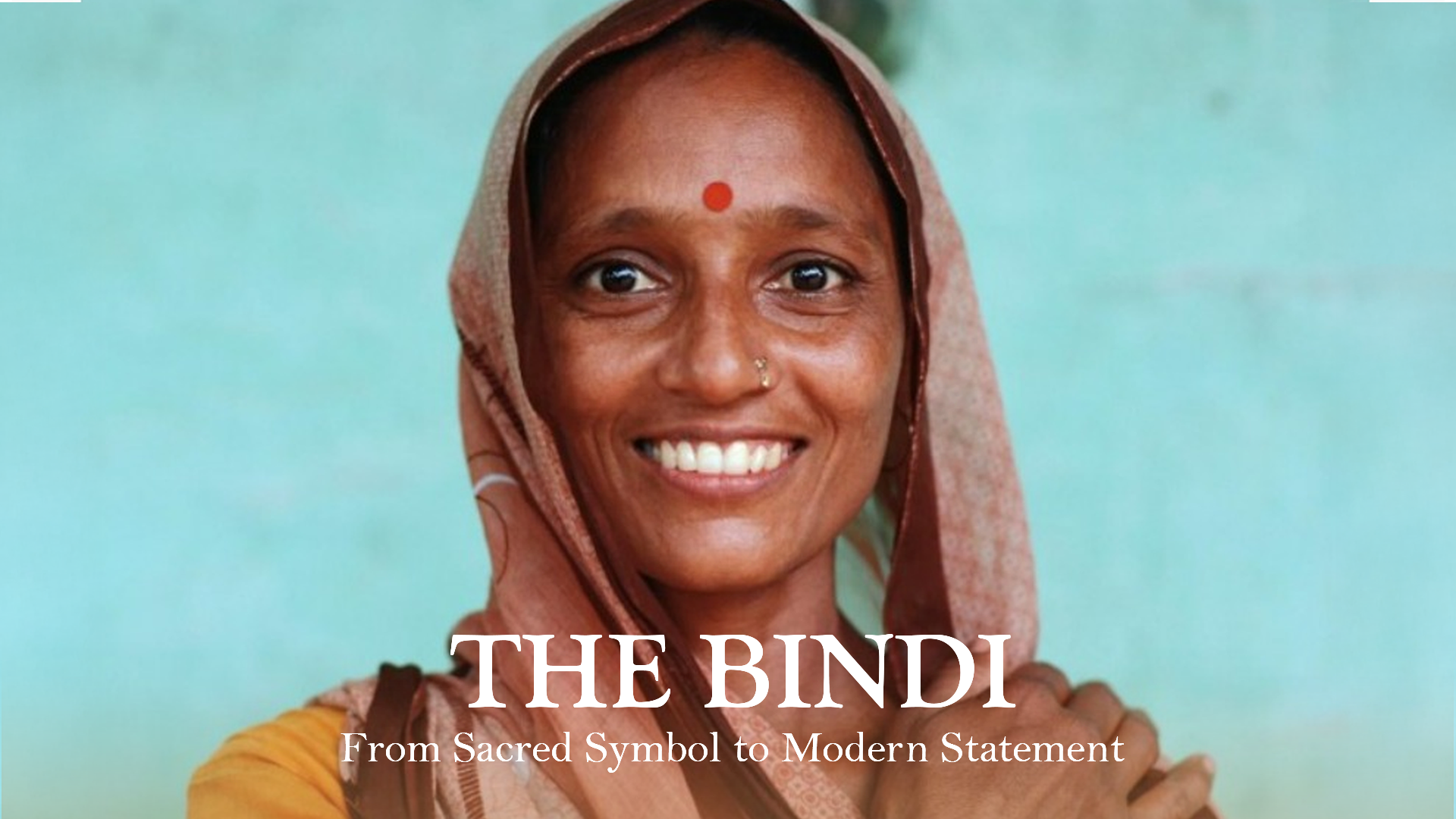
The Bindi: From Sacred Symbol to Modern Statement
The bindi – that distinctive dot adorning the forehead – has traveled an extraordinary journey from ancient spiritual symbol to contemporary fashion statement and political marker. This small mark, whose name derives from the Sanskrit word “bindu” (drop), encapsulates thousands of years of Indian cultural evolution.
Sacred Origins and Mythology
Rooted in Vedic tradition, the bindi’s placement between the eyebrows corresponds to the ajna chakra or “third eye,” believed to be the seat of concealed wisdom and spiritual energy. Ancient practitioners applied sandalwood paste, turmeric, or kumkum to this point to enhance concentration during meditation and retain vital energy. Hindu mythology weaves the bindi into sacred narratives – Goddess Parvati’s devotion to Shiva, manifested through sindoor on her forehead, established the tradition for married women. The red bindi became associated with Shakti (feminine divine energy), fertility, and marital prosperity.
Traditional Craftsmanship
Before commercialization, applying a bindi was an art form passed through generations. Women prepared kumkum from turmeric and lime, mixing it with water or ghee to create paste applied with the ring finger. Regional variations flourished: South Indian women perfected the circular pottu, Bengali women created elaborate flame shapes, and Rajasthani women wore distinctive vertical marks. Wedding bindis were ceremonial affairs, with brides receiving their first marital bindi as part of sacred rituals.
The Commercial Revolution
The 1980s brought dramatic change with companies like Shilpa Bindi introducing ready-made, adhesive bindis. This innovation solved practical problems – no smudging, instant application, perfect shapes – but also transformed the bindi from ritual marking to fashion accessory. The market exploded with varieties: different shapes, colors, rhinestones, and sequins. What was once limited to red kumkum expanded across the color spectrum, with designer bindis coordinated to outfits rather than traditions.
Politics and Identity
As India navigated modernity, the bindi became contested terrain. Early feminists viewed mandatory bindis as patriarchal constraints, while Hindu nationalist movements reclaimed them as markers of cultural identity. The bindi signified different allegiances depending on context – tradition versus progress, Hindu identity versus secularism, Indian culture versus Western influence. In the diaspora, it became a visible assertion of heritage, while its appropriation by Western celebrities sparked debates about cultural commodification.
Media Influence and Youth Culture
Indian television and Bollywood profoundly shaped bindi aesthetics. Religious epics reinforced traditional associations, while daily soaps showcased elaborate designer bindis that influenced real-world fashion. Characters’ bindis served as shorthand: large red dots signaled traditional values, while minimal or absent bindis indicated modernity. This media visibility both standardized and diversified bindi culture.
Contemporary Resonance
Today’s youth engage with bindis selectively and creatively. They wear them for festivals and family gatherings while going without in daily life, treating the bindi as part of a flexible Indian identity rather than rigid obligation. Social media showcases innovative applications – minimalist dots, artistic designs, fusion aesthetics. Young people reclaim the bindi on their own terms: as cultural connection, fashion choice, feminist statement, or spiritual practice. Some diaspora youth wear bindis to assert heritage; others avoid them to escape stereotyping.
The bindi endures because it adapts. Its journey from sacred third eye marking to multifaceted symbol demonstrates how traditions survive not by remaining frozen but by accumulating new meanings while retaining core significance. In that small forehead dot resides the complexity of navigating heritage in modern times – a visible reminder that culture is always evolving, always in conversation between past and present.
0 Comments