
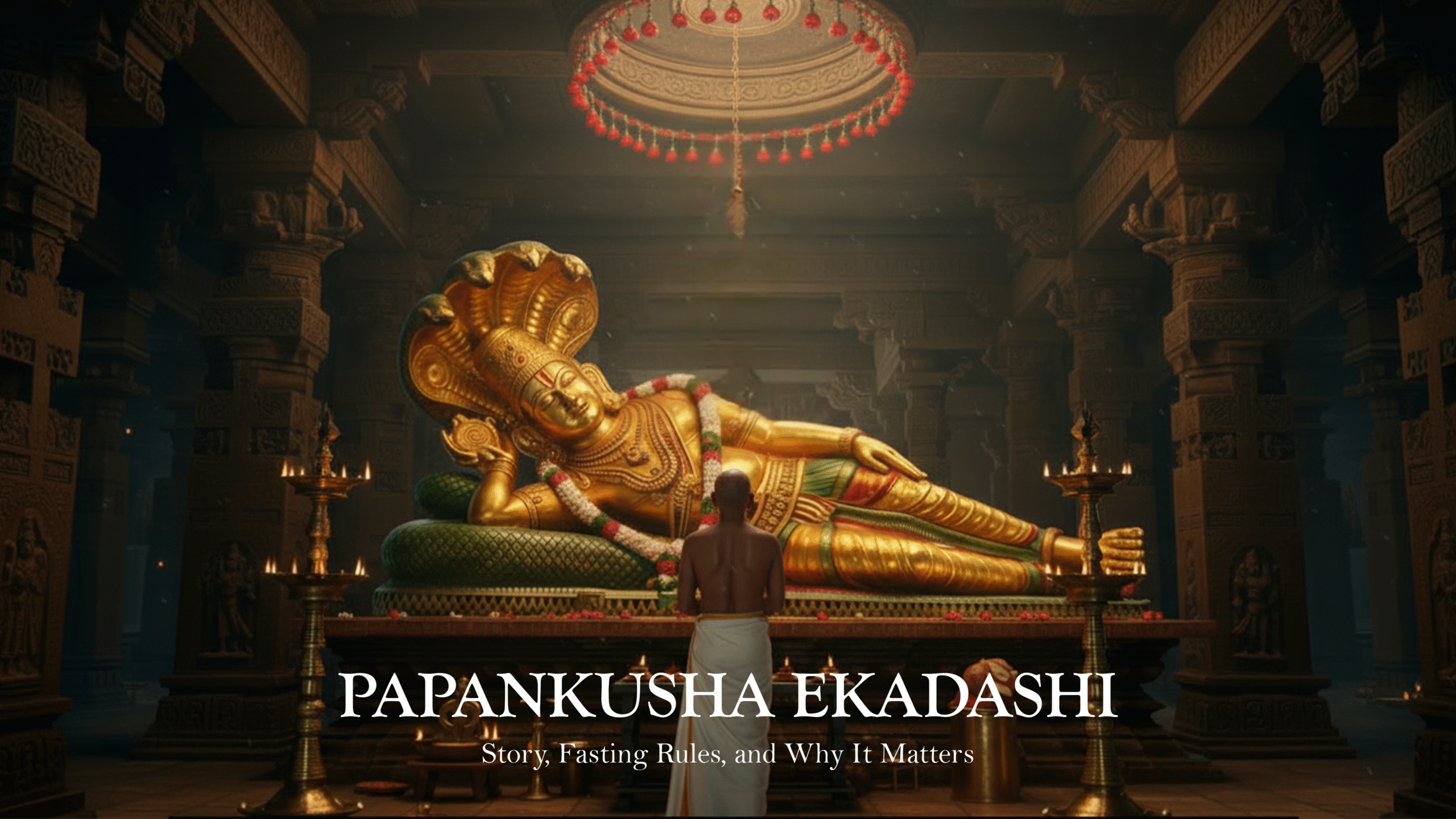
Papankusha Ekadashi: Story, Fasting Rules, and Why It Matters
We’re all running a relentless marathon today, one where every step is shadowed by stress, anxiety, and comparison. Scrolling through perfectly curated social media feeds often leads to a silent form of suffering: the mental noise we call ‘Overthinking’. Our minds constantly chatter, replaying past mistakes and catastrophizing future fears.
Have you ever considered that the solution to these modern ‘sins’—like jealousy, anger, and the habit of continuous self-comparison—might be hidden in our timeless ancient scriptures?
‘Papankusha’— The Goad for the Mind’s Elephant 🐘
The Ekadashi that falls on the bright fortnight of the Ashwin month is called Papankusha Ekadashi. Its name carries a profound meaning: ‘Papa’ means negative actions or thoughts (sins), and ‘Ankusha’ means a goad or controlling device.
Mythology describes this fast as the act of controlling the Elephant of Sin with the Goad of Virtue. In today’s context, our mind is that intoxicated elephant, constantly wandering through the jungles of uncontrolled thoughts, regret over old errors, and needless worries about the future.
- Ancient Wisdom: The practice of this Ekadashi teaches you precisely how to calm your mind’s ‘elephant,’ bringing it back onto the right path. It’s not merely about washing away past sins; it’s a science for achieving mental stability.
The Reward of Hard Penance, Attained with Ease ✨
The scriptures lavishly praise the fruit of this fast, stating that the merit gained is equivalent to performing thousands of Ashwamedha Yagnas and severe penance. This wisdom is incredibly encouraging for the younger generation, who are caught in an ‘instant result’ culture. The philosophy of Ekadashi tells us:
- Intent Over Intensity: You may not be able to spend hours in intense meditation, but for one single day, you can practice sincere contemplation (Ish Chintan) and silence (conserving energy by speaking less) to focus on your highest goal. This is the shortest path to purifying the mind and inviting positive virtues.
- Mental Control Above Planetary Influence: It is believed that observing this fast neutralizes the effects of a weak Moon (Chandra), which is the celestial body governing the mind. This implies that the fasting (Falahar) and all-night vigil (Jagarana) of Ekadashi strengthen your mental health and focus, ensuring that minor external influences (or life’s small problems) don’t derail you.
The Modern Youth’s Guide to ‘Ekadashi’
The Ekadashi fast is not just a religious ritual; it is the ancient equivalent of a ‘Digital Detox’ and a rigorous ‘Mindfulness’ practice:
| Papankusha Ekadashi Principle | Solution to the Modern Problem |
|---|---|
| Silent Contemplation | Overthinking: A one-day ‘no-negative-talk’ fast to quiet the incessant mental noise. |
| Charity (Gold, Food, Water, etc.) | Ego & Comparison: Giving shifts focus from self-centeredness, fostering gratitude and compassion. |
| All-Night Vigil (Hari Chintan) | Lack of Focus: The discipline of staying awake to concentrate on a single divine thought strengthens your willpower and mental endurance. |
This fast reassures us that no matter how many times we’ve stumbled, one day of sincere resolve and dedication can put us firmly on the path to Vaikuntha (a state of ultimate peace and success).
💡 The Reflective Question
If your mind is the ‘intoxicated elephant,’ which two principles of Ekadashi (like silence, charity, or fasting) will you incorporate into your modern routine as an ‘Ankusha’ to gain control and mental peace?
0 Comments